
Faculty Spotlight: Michael Salerno, MD, PhD
The Superpowers of Cardiac MRI
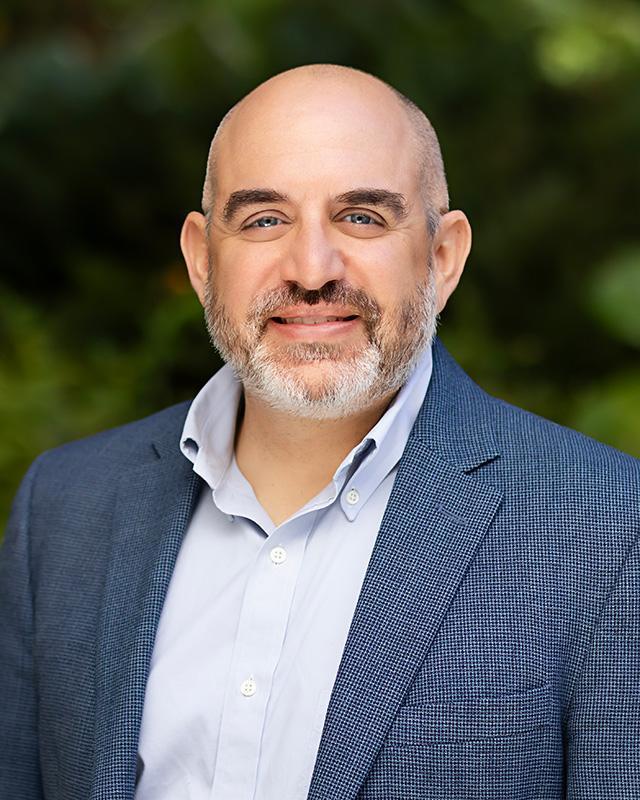
Photo credit: Andrea Rowe, UCSF
“Innovation usually happens at the intersection of different fields,” said Michael Salerno, MD, PhD, MS, chief of the UCSF Division of Cardiology’s Section of Echocardiography and Cardiac Imaging, director of Multimodality Cardiac Imaging, and Hugh and Eila Korpi Distinguished Professor in Cardiology Research. “As a cardiologist and biomedical engineer, I understand the technical aspects of image acquisition as well as how to use imaging to answer clinical questions.”
While Dr. Salerno is an expert in all types of cardiac imaging, including echocardiography, positron emission tomography (PET), and computed tomography (CT), his research has primarily focused on advancing clinical use of cardiac magnetic resonance imaging (MRI). It allows cardiologists to diagnose patients without having to administer radiation, insert a catheter into their heart, or take a heart biopsy. “We want to diagnose more people noninvasively, reserving invasive modalities like the cath lab for interventions,” he said. “Cardiac MRI was a research tool for a long time, but it has now become an important test in routine clinical practice.”
Cardiac MRI uses powerful magnets and radiofrequency pulses to detect signals from protons in water molecules, which are abundant in soft tissues such as the heart. MRI produces images that are clearer and more detailed compared with X-rays or nuclear scans. “MRI is the gold standard for looking at cardiac function,” said Dr. Salerno. “It’s more accurate than echocardiography and nuclear techniques. It allows us to look at the heart from any direction. For example, we can put a slice position at any angle to look at the heart of a patient with congenital heart disease, whose anatomy is not in the usual locations.”
Cardiac MRI is the best technique for identifying different kinds of scar in the heart. It is the only imaging tool that shows edema or swelling in the heart muscle, which can be caused by heart attack or inflammation. It can measure blood flow in the heart to assess the severity of leaky heart valves, measure heart perfusion to detect blockages in coronary arteries, and identify disease in the smaller heart arteries that may otherwise go undiagnosed. Cardiac MRI is high-value imaging, costing less than other tests such as SPECT or PET.
In recent years, researchers have addressed previous limitations of cardiac MRI. Now studies are routinely completed in less than one hour, and imaging can be done even in people with irregular heart rhythms and those who cannot hold their breath. Implantable devices such as pacemakers and implantable cardiac defibrillators were previously incompatible with MRI, but patients with these devices can now be imaged using specialized techniques.
Getting More Data, Faster
Dr. Salerno loves tackling difficult engineering problems, and found his calling with cardiac MRI. One big challenge is that the heart is constantly in motion. Each heartbeat creates motion artifacts – like trying to take a clear photo of a speeding car.
One way to minimize that blur with photography is to use a high shutter speed, so the film is exposed for a shorter period of time. Dr. Salerno has developed a similar approach for cardiac MRI. “As an engineer, it’s very compelling to think about creative ways to acquire imaging data faster, typically within tens of milliseconds,” he said. “Then I put on my cardiologist hat, using that information to better understand the physiology and pathophysiology of cardiac disease.” His innovative methods have led to nearly 20 patents.
Traditionally, MRI data has been collected in successive lines – a bit like a manual typewriter, which moves from left to right, then requires a carriage return to move to the next line down. “Every time you hit the ‘carriage return,’ there’s overhead associated with repeatedly exciting the magnetization and then acquiring data,” said Dr. Salerno.
His lab developed new ways to collect data in spiral patterns, a much more efficient method. “We can now acquire the same amount of data in about eight spirals that would have previously taken us 100 lines of data,” said Dr. Salerno. “That allows us to collect data more quickly, enabling us to get whole heart coverage and higher resolution than standard techniques.”
His lab has also pioneered the application of simultaneous multislice imaging – acquiring multiple lines of data at the same time for myocardial perfusion imaging. Dr. Salerno is now using AI and deep learning networks to more rapidly piece together information gathered during imaging. “Reconstructions that might have taken an hour to create an image can now be done in seconds,” he said. “We’ve really been focusing on how to make fast, accurate reconstructions, which is essential for translating advanced cardiac MRI into clinical use.”
Put a Number on It: Quantitative Imaging
Dr. Salerno has also led efforts to improve quantitative perfusion imaging, which maps out blood flow to the entire heart muscle. Although cardiac MRI cannot actually visualize the delicate filigree of the smallest blood vessels in the heart, it can measure blood flow within those vessels – both at rest and under stress. “For each pixel or dot in the image, we can determine what the blood flow is in that part of the heart,” he said.
This ability allows cardiologists to diagnose microvascular disease – blockages in the smaller vessels of the heart which are too subtle to identify with other imaging modalities. “Patients with chest pain may undergo heart catheterization, but when cardiologists don’t see any blockages in the coronary arteries, they tell the patient, ‘You’re totally fine,’” said Dr. Salerno. “In reality, some patients may have abnormal blood flow due to disease in the small vessels of the heart, which is something you can’t see with heart catheterization. These patients are symptomatic and face increased risk of heart attack and death. While there are not yet specific therapies for patients with microvascular disease, cardiac MRI could help us better understand this disease and guide drug development.”
This microvascular disease is underdiagnosed, and researchers are exploring its role in the heart health of women, diabetics, and people with heart failure with preserved ejection fraction (HFpEF) – a type of heart failure in which the heart squeezes normally, but is unable to completely relax and fill with blood for the next contraction. “We are on the cusp of routinely conducting quantitative stress perfusion for clinical work,” said Dr. Salerno.
His lab has also expanded the use of cardiac MRI to better identify not just focal fibrosis, or concentrated chunks of scar from a heart attack, but also diffuse fibrosis. This condition is associated with diseases such as HFpEF and hypertensive heart disease, and is characterized by a lacy network of scar that infiltrates the spaces in between heart cells throughout the entire heart, resulting in an increase in myocardial stiffness and abnormal relaxation of the heart even in the face of normal pumping function. Using a specialized technique called T1 mapping, they can determine if that extracellular space has expanded, suggesting diffuse fibrosis. “Water molecules are a sensitive probe of their local environment, and produce a different signal based on whether they are inside or in between cells,” said Dr. Salerno.
The other major innovation of Dr. Salerno’s lab is figuring out ways to acquire 3D imaging of the entire heart. “Instead of getting several planes, we get the whole cube,” he said. “It’s like putting a big box over the whole heart and collecting all the data within that volume. One potential advantage is that we don’t need a highly skilled technician to get specific slices, because afterwards we can take that 3D dataset and rotate to any specific plane, direction and orientation we want.”
Quantitative imaging is a throughline of all his work. “Instead of just making a picture, how do we obtain information to quantitate things like the amount of fibrosis or blood flow?” said Dr. Salerno. “We want to do the imaging faster to make things more efficient. That allows us to get the higher resolution images which make quantitative imaging possible.”
He is a leader in bringing quantitative imaging from the lab into clinical practice, and was senior author on the first consensus guidelines on quantitative stress perfusion cardiac MRI. “We’re trying to make this a clinical reality, so that all MRI stress studies are done with the ability to quantify the blood flow,” said Dr. Salerno. He and his team are currently leading a number of clinical trials related to quantitative stress cardiac MRI.
More Than 30 Years of Education
Dr. Salerno grew up on Long Island and earned his bachelor’s degree in biological engineering from Cornell University. “I took an engineering biophysics class that discussed functional MRI, which sparked my interest,” he said. “I looked for the first opportunity I could get in MRI research.” He joined an MRI research project led by plant scientists, using MRI to map sucrose distribution in sugar snap peas.
He earned his medical degree and PhD in biomedical engineering from the University of Virginia School of Medicine, performing research in brain imaging and completing his PhD dissertation developing new techniques to perform MRI imaging of the lungs using new inhaled hyperpolarized gas contrast agents. Near the end of his PhD work he met Christopher Kramer, MD, an expert in cardiac MRI who has been his mentor ever since. “It was so cool to see how you could use MRI to look at the beating heart and measure blood flow, and he believed that cardiac MRI would become a one-stop shop for cardiac imaging” said Dr. Salerno.
After finishing his internal medicine residency at Stanford University Medical Center, Dr. Salerno completed his general cardiology fellowship at Duke University Medical Center, including a dedicated year in the Duke Cardiovascular MRI program. He then completed an advanced cardiovascular imaging fellowship at the University of Virginia, where he later joined the faculty and earned a master’s degree in statistics. “I finally gave up on school after 34th grade!” he said with a laugh.
Cultivating the Next Generation of Leaders
Dr. Salerno has used these decades of training to translate innovations in cardiac imaging into clinical practice, and to teach the next generation of cardiovascular imaging experts. At the University of Virginia, he helped develop a coronary CT program to rapidly triage patients in the emergency department, helped build their PET program, trained more than 20 cardiovascular imaging fellows, and led an NIH-funded engineering lab. “One cool thing we did was pair our postdocs and graduate students with our imaging fellows, so they could share their technical and clinical knowledge with each other,” he said. “We also had a strong collaboration between cardiology, radiology and biomedical engineering.”
At Stanford, he served as their inaugural section chief of cardiac imaging and roughly doubled their clinical volume of cardiac MR and cardiac CT. He opened three new outpatient echocardiography labs, developed their stress cardiac MRI program, created a multimodality cardiovascular imaging conference for attendings, fellows, technologists and sonographers, and grew their cardiovascular imaging fellowship program.
In December 2024, Dr. Salerno joined the UCSF Division of Cardiology faculty as chief of the section of Echocardiography and Cardiac Imaging, expanding the section’s scope from primarily echocardiography to include all types of cardiovascular imaging. He also serves as director of Multimodality Cardiac Imaging and leads the UCSF Advanced Non-Invasive Cardiovascular Imaging fellowship program, training cardiologists and radiologists how to interpret echo, MRI, CT, and nuclear imaging, and how to combine the information from these modalities. “I’m invested in my trainees,” he said. “It’s fun to see them become leaders in the field. Their successes are the most rewarding part of academic medicine.”
Since joining UCSF, Dr. Salerno has worked with his colleagues in the UCSF Division of Cardiology and UCSF Department of Radiology and Biomedical Imaging to expand educational, clinical, and research initiatives related to cardiovascular imaging. Together they have established a weekly multimodality imaging conference for cardiac imaging faculty, general cardiology fellows, and advanced cardiovascular imaging fellows to discuss the use of different cardiac imaging modalities in the care of patients, including echocardiography, cardiac MRI, cardiac CT, and nuclear imaging.
“Instead of thinking about the heart from the point of view of a single type of imaging, we look at various disease processes, such as hypertrophic cardiomyopathy or cardiac sarcoidosis, and ask, ‘How do you use all of the different imaging modalities together to make a diagnosis?’” said Dr. Salerno. He has partnered with Christopher Lee, MD, a recent UCSF advanced cardiovascular imaging fellow and now a UCSF Cardiology faculty member, on building out the cardiovascular imaging educational curriculum.
For the general cardiology fellows, he has helped lead the creation of an imaging rotation that provides exposure to various imaging modalities. “Today, imaging is so fundamental across all the different subspecialties, whether it’s interventional cardiology, heart failure, valvular heart disease, or electrophysiology,” said Dr. Salerno. “Our goal for the general cardiology fellows is to build awareness, so when they send patients for a cardiac MRI, they’ve seen the scanner and know what it will be like for their patients to get that procedure. They’ll also know what some of the challenges are in interpreting the results. This training will also help them know which imaging modality to order in specific situations.”
The advanced cardiovascular imaging fellows develop further expertise in interpreting imaging results and integrating knowledge across all the various modalities in the diagnosis and treatment of patients. Dr. Salerno hopes to pilot an educational pathway for general cardiology fellows who are interested in imaging, helping them focus their final year of fellowship on clinical imaging research, followed by an additional year of advanced imaging fellowship. “That would effectively give them two years focused on imaging and imaging-related research and help train people who will become leaders in the field,” he said.
Dr. Salerno is a national leader in advancing cardiovascular imaging. He currently serves as chair of the American College of Cardiology Imaging Leadership Council, whose goals include helping institutions build multimodality imaging programs.
Rare Combination of Expertise
On the clinical side, Dr. Salerno has partnered with Francesca Delling, MD, MPH, medical director of the UCSF Echocardiography Lab, to optimize quality of image acquisition to obtain the clearest, most informative pictures possible. Together they are also working to streamline workflows, expand capacity, and increase educational opportunities in the lab. They recently established a stress MRI program; by giving patients a medicine that makes their heart temporarily beat faster, cardiologists use cardiac MRI to obtain detailed information about heart function and structure, scarring in the heart, and any blockages in the heart arteries.
Dr. Salerno has partnered with David Saloner, PhD, professor in the Department of Radiology and Biomedical Imaging and director and founder of the Vascular Imaging Research Center at the San Francisco Veterans Affairs Medical Center, to establish a biweekly research conference. “We’re bringing together different groups in cardiology, radiology, and engineering that do cardiovascular imaging,” said Dr. Salerno. “I would like to get collaborative research projects going in hypertrophic cardiomyopathy, cardiometabolic imaging, valvular heart disease, and non-ischemic cardiomyopathies like myocarditis and amyloidosis. Those are areas where cardiac MRI could be helpful.”
He deeply values his collaborations with other colleagues in the Department of Radiology and Biomedical Imaging, including Brett Elicker, MD, chief of the Cardiac and Pulmonary Imaging Section ,Yoo Jin Lee, MD, one of his former trainees at the University of Virginia who now partners with him on cardiac MRI initiatives; Kimberly Kallianos, MD, who he partners with for CT and Miguel Hernandez Pampaloni, MD, PhD, director of Nuclear Cardiology for the Molecular Imaging and Therapeutics Clinical Section, his collaborator on cardiac PET.
Dr. Salerno is enthusiastic about joining UCSF. “Having good collaboration between cardiology and radiology improves patient care and education, and makes working at UCSF a lot of fun,” he said. “Everyone, from physicians to medical students, lab managers and schedulers, is helpful and wants to do the right thing for patients. I want to grow our cardiac MRI program, use our CT program to rapidly triage patients in the emergency department and hospital, train future leaders in cardiovascular imaging, and grow our cardiovascular imaging research footprint. I want to see UCSF become the internationally recognized leader in cardiovascular imaging, both for clinical research and education.
“Dr. Salerno is a unicorn – a clinical cardiologist who is facile at developing novel pulse sequences on an MRI scanner,” said his longtime mentor Dr. Christopher Kramer, chief of the University of Virginia Cardiology Division and current president of the American College of Cardiology. “He has performed pioneering research on technical improvements in the quantitation of myocardial blood flow with MRI and increasing the speed and utility of cardiac MRI techniques.”
“Michael is not only a pioneer in developing the use of MRI technology for stress testing – unlocking potentially much more sensitive studies to detect ischemia in the heart – he is also an expert in all areas of cardiac imaging,” said Jeffrey Olgin, MD, chief of the UCSF Division of Cardiology and Ernest Gallo-Kanu Chatterjee Distinguished Professor in Clinical Cardiology. “He was recruited jointly with cardiology and radiology as a ‘bridge’ between the departments, and as the director of Multimodality Cardiac Imaging he will focus on delivering cutting-edge imaging techniques to our patients.”
Besides work, Dr. Salerno enjoys sailing, rock climbing and biking. He and his wife, Cherie, have two sons.
- Elizabeth Chur