
Faculty Spotlight: Christopher Lee, MD
Bringing Hypertrophic Cardiomyopathy into Focus
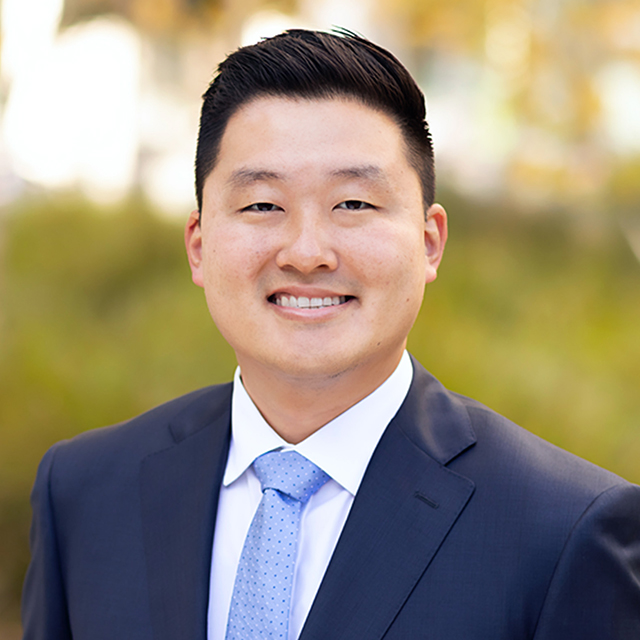
Photo credit: Andrea Rowe, UCSF
Whether he’s working with trainees or caring for patients, cardiologist Christopher Lee, MD, is a teacher at heart. “When I see that spark of understanding in their eyes, that to me is everything,” he said.
He often shows patients images of their heart next to a typical heart. “When they see the two side by side, they can see that their heart is thicker, or that there’s scarring,” said Dr. Lee. “They say, ‘I get it. What can I do?’ I can teach anyone how to look at and understand cardiac imaging. It’s my job to be their guide and tell them why it’s important.”
Dr. Lee was born in Los Angeles and grew up in Glendale, Calif., the son of Korean immigrants. His parents extolled the importance of service, and the family often visited convalescent homes to play music – his sister and father on violin, mother on piano, and Dr. Lee playing cello. “Residents gathered to listen and said it was the highlight of their week,” said Dr. Lee. “That meant the world to me. I thought, ‘If I could make people feel that way all day long, that would be a really good way to spend my life.’” Medicine offered that opportunity.
At UC San Diego, Dr. Lee double majored in history as well as biochemistry and cell biology. After working for a local biotechnology company, he earned his medical degree from UC San Diego. He enjoyed learning about hemodynamics and caring for very sick patients, which inspired him to become a cardiologist. Dr. Lee completed his internal medicine residency at the University of Southern California and cardiology fellowship at Dartmouth, where he also served as chief cardiology fellow. He then did an advanced fellowship in non-invasive cardiovascular imaging at UCSF.
“I learned early on how important it was to see patients as human beings,” said Dr. Lee. “I still remember my first cadaver in medical school. You could tell she had taken pride in her appearance: she had very clean, manicured nails, painted a salmon pink. Seeing those nails tugged at my heart and made me realize what a wonderful gift she had imparted to us by donating her body to science.”
His first preceptor was Michelle Lee Johnson, MD, director of the UC San Diego Student-Run Free Clinic Project. “Dr. Johnson was the face of calm,” said Dr. Lee. “Patients were scared because they didn’t have health insurance or were undocumented, but she had an incredible way of being with them that was honest, skilled, and prepared them for what came next. I try to channel her.”
During his final year of residency, the COVID-19 pandemic hit with a vengeance. “It was awful, because at the county hospital ICU there were rows of people who were ventilated and critically ill for weeks at a time,” recalled Dr. Lee. “Family members were worried sick, but couldn’t be at the bedside to hold their loved one’s hands. They relied on us, and it made me realize that I’m in this profession as a calling.”
That shaped his approach to communication. “I try to map out the journey and set people’s expectations, no matter how scary things may be,” said Dr. Lee. “If I’ve prepared you for it, you know we have a plan. Family members may feel enormous guilt and financial pressure if I tell them their loved one needs 24 hour care. They want to be with their family member, but their lives are across the country. I tell them, ‘You’re not supposed to know how to deal with all this, but I’m here to help you navigate this.’”
Cardiac Imaging and Hypertrophic Cardiomyopathy
During training, Dr. Lee became interested in a condition called hypertrophic cardiomyopathy (HCM). It is an inherited heart disorder characterized by an abnormally thickened heart, affecting one in every 500 people in the U.S.; recent estimates show an even higher prevalence of up to one in every 200 people. People with HCM may experience chest pain, shortness of breath, or fainting. Tragically, sometimes the first symptom is sudden death, and it is the leading cause of death among young athletes. HCM is caused by genetic mutations affecting structural proteins in the heart, but so far culprit genes have been only identified in about 30 percent of cases. That makes diagnosis challenging.
“I latched onto HCM because I’m a multimodality imager, and HCM has very interesting imaging,” said Dr. Lee. “Echocardiograms show very thick hearts, gradients throughout the heart, and high pressures from point A to point B. I like MRI [magnetic resonance imaging], which is supremely important in managing these patients.” MRI can reveal how much scar a patient has on their heart, which can increase their risk of developing life-threatening cardiac arrhythmias, and help identify which patients might need an implantable cardiac defibrillator (ICD) to help prevent sudden cardiac death.
One of his fellowship mentors, Cynthia Taub, MD, MBA, recommended that Dr. Lee study with UCSF cardiologist and echocardiographer Theodore (Ted) Abraham, MD, a world expert on HCM and co-director of the UCSF HCM Center of Excellence. “As I was applying for advanced fellowships, I wanted to do multimodality imaging, but I also wanted a mentor,” said Dr. Lee. “Dr. Abraham has done a great job of teaching me the ins and outs of how to be not only an HCM clinician, but also a researcher.”
“I was impressed with Dr. Lee, even before his interview,” said Dr. Abraham. “He came across as knowledgeable, kind, and highly interested in hypertrophic cardiomyopathy. I was delighted when he decided to stay on as faculty. He has been an amazing addition to our HCM Center of Excellence, bringing much needed skills in advanced cardiac imaging such as cardiac MRI and computed tomography in addition to his expertise in advanced echocardiography. He is an astute clinician, an exquisite researcher, and most importantly, a kind and compassionate physician. I am personally delighted he is part of our team and contributing immensely to our success.”
Dr. Lee also works closely with other imaging experts, including Michael Salerno, MD, PhD, a pioneer in cardiac MRI, and echocardiography legend Nelson B. Schiller, MD, John J. Sampson-Lucie Stern Endowed Chair in Cardiology.
“Chris Lee has a strong skill set in advanced cardiovascular imaging and in caring for patients with hypertrophic cardiomyopathy,” said Dr. Salerno. “He is a great teacher, excellent clinician, and an all-star cardiovascular imager. I am so happy to have him as a junior colleague in our cardiovascular imaging section.”
“Among the many outstanding imaging fellows I have mentored, Chris Lee stands at the top,” said Dr. Schiller. “During his fellowship years, Chris was assigned to my faculty practice clinic and contributed stellar clinical judgment and a winning professional and personal demeanor. His research was conducted with insight and originality. I was thrilled when he joined our faculty, and it is not a stretch to say that in a very short time he has taken his place as a highly admired researcher and clinician.”
Using Strain Imaging to Measure Function
“We are at a very big inflection point in the way we diagnose and treat patients,” said Dr. Lee. “Cardiology is becoming very dependent on imaging technology. Just 10 years ago, we routinely did a lot more heart biopsies and cardiac catheterizations, which are invasive procedures that involve going into the heart. With cardiac CT and MRI becoming more routinely available, we’re using it more often, and it’s a very important tool.”
Imaging is indispensable for identifying HCM, since it is currently diagnosed by first ruling out at least 10 other conditions that can look very similar. While normal heart walls are about 10 millimeters thick, HCM is defined as having a heart wall measuring 15 millimeters or more (or 13 millimeters or more in patients with a family history of HCM), in the absence of another underlying cause. Other conditions that can cause abnormal thickening include high blood pressure, valve disease, infiltrative conditions like amyloidosis, other genetic conditions such as Fabry disease, iron overload syndrome, and malignancy.
“These conditions can look exactly the same as HCM, and we won’t know unless we go through the whole process of doing the workup, looking at bloodwork, doing genetic testing, and conducting the MRI,” said Dr. Lee. “It’s important to make a correct diagnosis, because if they do have HCM and other clinical risk factors, we may recommend that they receive an ICD.”
Dr. Lee’s research focuses on using multimodality imaging to better diagnose, manage, and improve treatment of patients with HCM. He, Dr. Abraham, and Dr. Schiller have been studying patients’ hearts using a relatively new technology called strain imaging. “Strain” is an engineering concept used to measure how stretchy something is; for example, if a bungee cord stretches from 10 to 15 feet, it demonstrates a strain of 50 percent.
Currently, most cardiologists assess heart function by visually estimating the measurements of the ventricles – the bottom two chambers of the heart. One of the main metrics is ejection fraction, an estimate of how well the left ventricle pumps blood. But this approach has limitations. “Two hearts may look exactly the same, but one has normal strain and the other is abnormal,” said Dr. Lee. “Strain imaging gives you a numerical measurement that you can’t determine just by looking at an image, but a machine can detect it for you.”
Another limitation of current practice is that the ventricles get most of the glory, while the atria – the upper chambers of the heart – are understudied. Their size is not usually measured, and their baseline functionality is not yet defined. “The atria have traditionally been thought to be collection chambers, but in my opinion, they have their own heart function,” said Dr. Lee. “People get immensely symptomatic when the atria don’t work well, especially in HCM. Each chamber and heart valve has its own very important job.”
Dr. Lee, Dr. Abraham, and Dr. Schiller recently published their findings reporting normal values for right atrial strain in healthy volunteers. “We were trying to understand, what is normal?” said Dr. Lee. “You don’t know unless you have normal volunteers without any cardiac pathology. Atrial strain is slowly starting to make its way into guidelines, but most people don’t really know what it is yet.”
A High-Pressure Situation
Atrial strain is particularly revealing in patients with HCM. “HCM patients have a lot of pressure in the heart, and the atria are the mirror into that,” said Dr. Lee. Rather than being a single disease, HCM comes in different “flavors,” depending on where the thickening occurs. These sites may include the base of the left ventricle, the septum – the wall separating the right and left sides of the heart – the bottom tip of the heart, or areas throughout the heart.
In normal hearts, the myofibrils – the slender muscle strands that cause the heart to contract – are neatly arranged in parallel lines, like elastic threads in a waistband. With HCM, those myofibrils go in many different directions, sometimes leaving big areas without much muscle tissue. Scarring can develop to fill in those gaps, and the resulting heart tissue has less ability to expand and contract. Thickening in the heart wall also leaves less space in the ventricles to fill with blood, creating higher blood pressure which can back up into the atria – like cars backing up on the highway when a lane is closed for construction.
“Often in HCM, the left atrium gets very big over time because of the high pressure that backs up from the left ventricle,” said Dr. Lee. “I predict that in the future, measuring heart function not only in the ventricles but also the atria will become a standard portion of echo and imaging reports – not just their size, but also their level of functionality.”
Besides the four “flavors” of HCM, there are two other broad categories of the disease. Obstructive HCM means the heart has trouble pumping blood to the body due to blockages caused by thickening of the septum or areas near the heart valves. Though nonobstructive HCM does not share the same blockages, it can still lead to other issues, such as trouble pumping and relaxing, aneurysm formation, high pressures throughout the heart, and electrical rhythm abnormalities.
In addition to discovering more about the atria using strain imaging, Dr. Lee is investigating how well HCM patients respond to new therapies. “For about 60 years, there were no new treatments to help patients with HCM,” he said. “We just had beta blockers, calcium channel blockers, antiarrhythmic medications, and surgery.”
But in 2022, a new drug called mavacamten was approved by the U.S. Food and Drug Administration. It can help HCM patients with obstructive HCM, but unfortunately is not effective for patients with nonobstructive HCM. “If we could find a therapeutic to help patients with non-obstructive HCM, it would be the Golden Goose,” said Dr. Lee. He helps lead many clinical trials of potential therapies for both obstructive and non-obstructive HCM.
Dr. Lee is also working with UCSF radiologist Jae Ho Sohn, MD, MS and others, using AI to study how imaging data could help risk-stratify patients with various heart and lung conditions. Other research projects focus on using imaging to better guide treatment for patients with HCM. “My goal is to find therapies that can either reverse the HCM disease process, or lead to better outcomes,” he said.
Questioning Conventional Wisdom
In addition to HCM, Dr. Lee has interests in many other areas of cardiology. “I focus on areas that are underrecognized and pursue research to challenge underlying assumptions, all with the hope of improving patient care,” he said.
He collaborated with a mentor at Dartmouth, cardiology vascular medicine specialist Stanislav Henkin, MD, MPH, on an assessment of the safety of major vascular surgery, and best practices for minimizing postprocedural risk. They also evaluated outcomes for patients with peripheral artery disease who received a stent or other procedure to restore blood flow to a limb. “We found that we shouldn’t just reflexively put these patients on dual antiplatelet therapy and anticoagulation at the same time, because they will likely bleed more, and it will not help save their limb,” said Dr. Lee.
He also wrote a paper describing long-standing functional impairments that occur in up to half of all patients who have had a pulmonary embolism (PE) – a blood clot in the lungs. “Some people take blood thinners, and after several months they’re all better,” said Dr. Lee. “But others don’t feel better, even six months after treatment.” Symptoms may include shortness of breath, pulmonary hypertension, and decreased quality of life. “Should we be more aggressive with these patients?” he asked. “Should we be giving them a higher dose of a clot buster, or go in with our equipment to try to suck out as much of the clot as possible?”
While those questions remain to be answered, Dr. Lee hopes to eventually be part of a pulmonary embolism response team (PERT) at UCSF. This multidisciplinary group could include experts from cardiology, interventional radiology, critical care medicine, anesthesiology, and other specialties. In addition to providing acute care for PE, they could also help discover ways to prevent patients from developing post-PE syndrome.
He and his colleagues have championed that interdisciplinary team approach. “Cardiology doesn’t exist in a vacuum, and patients do a lot better when multidisciplinary teams see them and discuss their care,” said Dr. Lee. “Unfortunately, it’s not a standard part of the medical system, and most places that do have them are larger academic institutions. UCSF has heart teams in many areas, but there’s still room for improvement. Carving out time for collaborative care is important, because insurance doesn’t necessarily reimburse for that time.” In conjunction with Michael Young, MD, one of his fellowship mentors, Dr. Lee described how heart teams work, and best practices for optimizing this approach.
In other research, Dr. Lee and his colleagues found that in an animal model, a problem in the heart’s electrical conduction system called left bundle branch block was associated with significant scarring in the heart, which was linked with worsening left ventricular dysfunction. “We found that the hearts were big, didn’t move as well, and had a lot of fibrosis,” he said. “Rather than just being an electrical issue, we discovered it adversely impacted heart function – something that challenged conventional wisdom.”
A Partner and Guide for Patients
As much as he enjoys research, Dr. Lee considers himself a clinician first and foremost. “I try hard to be a partner when things are most uncertain, and to lead patients through challenging times,” he said. He sees both HCM and general cardiology patients in clinic, cares for hospitalized patients, conducts multimodality imaging, and interprets echocardiograms.
He is grateful to be working at UCSF. “It’s a joy to work with and learn from colleagues who are well-rounded and experts in their field,” said Dr. Lee. “Teaching the next generation of trainees through case-based learning in a way they will understand is also important to me, and one of the reasons I stayed in academic medicine. I love being at a world-class institution where we do everything very well.”
Outside of medicine, Dr. Lee enjoys spending time at the beach and learning to snowboard. He is married to Sandra Yang, an ICU nurse at California Pacific Medical Center. His perfect day includes going for a hike with his wife and their cat, Ollie, playing pickleball, and watching a Dodgers game.
- Elizabeth Chur