
Faculty Spotlight: Daniel Morin, MD
Coming Full Circle: Helping Patients with Cardiac Arrhythmias
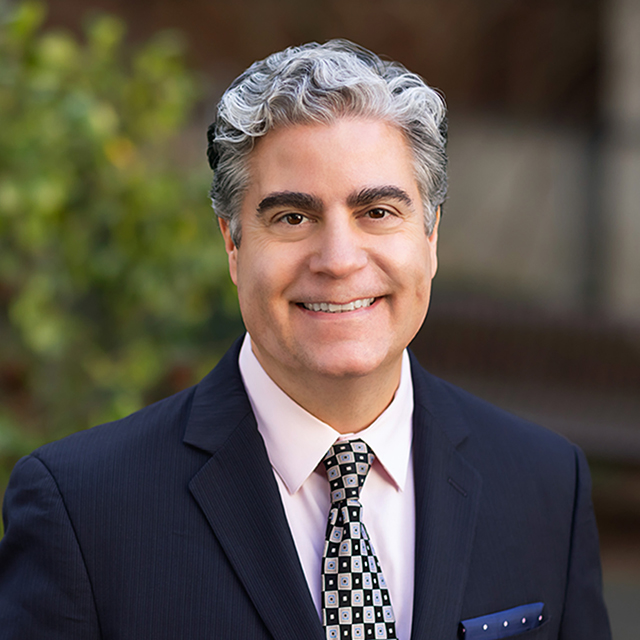
Photo credit: Andrea Rowe, UCSF
When he was just 14 years old, Daniel Morin, MD, MPH, lost his father to a cardiac arrhythmia. “Although my mother and aunt were both nurses, they were unable to revive him,” he said. “He was fine one minute and gone the next. That had a giant impact on me.”
Two years later, Dr. Morin was in a serious car accident. “I was comatose and broke a lot of bones,” he said. “During an extended hospital stay and a lot of rehab, I was inspired by the doctors and rehab specialists helping me get stronger and learn to walk again. Some teachers came to my house and taught me so I could get back to high school. I had an incredible amount of community support.”
Those two events motivated him to become a physician, and eventually a cardiac electrophysiologist. He now helps patients like his father live longer, healthier lives. “When I was 14 I didn’t know my dad died because of a heart rhythm problem, but as I learned more about it, it became personal,” said Dr. Morin, now Samuel T. and Elizabeth Webb Reeves Endowed Chair in Arrhythmia Research at UCSF.
He serves as director of the UCSF Cardiac Electrophysiology Laboratory, helping patients with heart rhythm disorders by implanting devices and performing cardiac ablations. He also conducts research to discover better ways to care for patients, and has editorial positions at several medical journals. “I’m interested in involving patients in their own care, making scientific discoveries, and applying that knowledge to decision-making policy to improve the lives of patients around the world,” said Dr. Morin.
Inspiring Mentors
Dr. Morin grew up in Groton, Mass., a small town near Boston, next door to his grandparents and aunt. “We had sort of a ‘compound,’ with my whole immediate family and some extended family members all in three houses in a row,” he said. “It was a really neat situation.”
His love of science, math, and engineering, as well as his early experiences of loss and healing, steered him toward medicine. After earning his bachelor’s degree in biology from Cornell University, he completed his medical degree at the University of Massachusetts Medical School and his master of public health degree at the Harvard University School of Public Health.
“During medical school I was active in the Massachusetts Medical Society and the American Medical Association, and became interested in health policy,” said Dr. Morin. “I’m interested in treating not only individual patients but also populations by making policy decisions. I also wanted to learn to communicate complex health information to people who don’t have medical training.”
During internal medicine residency at Tufts New England Medical Center in Boston, he was drawn to caring for seriously ill patients. Discovering how common heart disease is dovetailed with his interest in public health. “There’s nothing like cardiology for studying large numbers of patients to improve health,” said Dr. Morin.
One of his mentors during residency was N.A. Mark Estes III, MD, a cardiac electrophysiologist. “As an intern, I was caring for a patient with a heart rhythm disorder in the Cardiac Intensive Care Unit,” said Dr. Morin. “Although I didn’t know Dr. Estes well, I called him at 10 p.m. to go through the case. Shortly thereafter he showed up, in a suit and tie. After making sure the patient was all right, he sat down and taught me. His dedication and ability to teach at a variety of levels inspired me.”
After residency, Dr. Morin spent a year as a hospitalist on Martha’s Vineyard, in Northern California, and in Hawaii, then completed fellowships in general cardiology and cardiac electrophysiology at Weill Cornell Medical Center in New York. There, he was inspired by another mentor, cardiac electrophysiologist Steven Markowitz, MD. “He has a tremendous ability to remain patient and calm, even in the face of extreme acuity,” said Dr. Morin. “At the point many doctors would give up, he’s fantastic at trying another thing or two. I’ve taken that to heart – I try to exhaust all possibilities to help patients.”
Discovering Better Ways to Treat Arrhythmias
After completing his fellowships, Dr. Morin accepted a position in New Orleans as a cardiac electrophysiologist at Ochsner Health System and the University of Queensland Medical School-Ochsner Clinical School, where he remained for 16 years. He eventually served as director of cardiovascular research and chair of the entire health system’s research executive board.
Dr. Morin engages in a wide range of electrophysiology research to improve patient outcomes. “One of my main interests is developing better ways to risk-stratify patients like my father, who may ultimately develop the bad heart rhythms that cause them to die suddenly,” he said. Currently, the main metric is left ventricular ejection fraction, which estimates the squeezing function of the heart. “When that’s low, people are more likely to develop deadly fast heart rhythms,” he said. “But ejection fraction is neither sensitive enough nor specific enough a criterion to decide who should get a defibrillator.”
An implantable cardioverter defibrillator (ICD) is a device that detects dangerous abnormal heart rhythms and shocks the heart back into normal rhythm. However, many patients with low ejection fraction receive an ICD but never require a shock, whereas others with normal ejection fraction do not receive an ICD but later experience a life-threatening arrhythmia.
Dr. Morin’s group examined the electrocardiograms (EKGs) of patients who had received ICDs, focusing on a part of the cardiac cycle called the T-peak to T-end interval. That’s the period when the ventricle’s electrical system is repolarizing, or preparing for the next heartbeat. “If repolarization takes a longer period of time, those patients are more prone to having an extra beat during that time, which can set off ventricular tachycardia or ventricular fibrillation,” he said. “We found that patients with a longer T-peak to T-end interval were more likely to receive an appropriate ICD shock over time.”
He also led the LIFEMARKER-VT (Longitudinal Study of Inflammatory Biomarkers and Ventricular Tachyarrhythmia) study, which collected blood samples every three months from patients who had received an ICD. They sought to identify biomarkers that might serve as early warning signals for risk of dangerous cardiac arrhythmias or death. “We found that some of the inflammatory markers were able to predict death, but were not able to predict ventricular tachycardia or ventricular fibrillation,” said Dr. Morin.
He and his colleagues also tested a new way to reset the heart rhythm of obese patients with atrial fibrillation. Typically, cardiologists sedate a patient and then perform a cardioversion, using one set of pads to administer an electric shock to the heart. “When patients are obese, there’s a lot more tissue between their body surface and heart, and fat tissue doesn’t conduct electricity so well,” said Dr. Morin. “That makes the shock more dispersed, and the electrons are less likely to reach the atria.”
Anecdotally, they previously had been much more successful cardioverting obese patients using two sets of pads. Dr. Morin’s team conducted a multicenter randomized clinical trial to formally test this observation. “By using two sets of pads at the same time, or ‘dual synchronized cardioversion,’ we had a failure rate of only 2 percent, as opposed to single cardioversion, which failed 14 percent of the time,” said Dr. Morin.
Devices and Decision-Making
Another of Dr. Morin’s investigations sought to develop a new treatment for patients with pulmonary arterial hypertension, characterized by high blood pressure in the vessels carrying blood from the heart to the lungs. “We’re getting better at treating pulmonary hypertension with medicines, but it remains a very morbid and mortal condition,” said Dr. Morin.
One complication is that very high blood pressure in the lungs can back up into the right ventricle, causing the blood pressure there to be even higher than in the left ventricle. “That almost never happens under normal circumstances,” said Dr. Morin. “The problem is that the two ventricles share a wall, called the septum. If the pressure gets really high in the right ventricle, it pushes the wall into the left ventricle, a condition called septal bowing.”
That septal bowing limits the left ventricle’s ability to fill with blood and compromises its pumping capacity. Septal bowing tends to happen especially towards the end of diastole, or the relaxation phase after each heartbeat. “Our idea was, let’s get rid of the last 40 milliseconds of diastole,” said Dr. Morin.
He led a small study of pulmonary arterial hypertension patients, delivering stimulating electrical impulses to both the right and left ventricles a little earlier than the ventricles would activate themselves. “There was an improvement in the cardiac output in a subset of patients who had the highest pulmonary artery pressure, the most severe pulmonary hypertension, and the most obvious intraventricular septal bowing,” said Dr. Morin. Next, he hopes to study whether applying this intervention using a pacemaker might have long-term benefit.
In another collaboration, Dr. Morin worked with Paul Wang, MD, another of his residency mentors who now leads the electrophysiology group at Stanford, as well as other partners at the Cleveland Clinic, Cooper Healthcare, East Carolina University, and other institutions. They conducted a randomized controlled trial of a new tool to support shared decision-making.
“Patients with atrial fibrillation are five times as likely to develop a stroke,” said Dr. Morin. “The main way we avoid strokes is to thin their blood with medication. But there are downsides, including increased risk of bleeding. In general, it’s better for these patients to take a blood thinner, but each person has to make their own decision. The goal of this tool was to educate patients making that decision, in order to reduce decisional anxiety and decrease regret about their decision as much as possible.”
In partnership with patients, primary care physicians, cardiologists, and a psychologist with expertise in decision-making around heart rhythm disorders, Dr. Morin and his colleagues used design thinking to develop a digital toolkit in English and Spanish. Before meeting with their doctor, patients viewed an animated educational video and took a quiz to measure their understanding level of the risks and benefits of blood thinners.
“In a randomized clinical trial of 1,000 patients, we found that the patients who engaged with the digital toolkit felt more empowered to make their decision, and were less likely to feel bad about it afterwards,” said Dr. Morin. The researchers are now developing a similar educational tool to help older patients decide whether to receive an ICD.
Dr. Morin was also part of the team that conducted the VEST Trial. This multicenter randomized clinical trial, centered at UCSF, studied whether patients who used a wearable cardioverter-defibrillator after having a heart attack, but before they became eligible for an implantable ICD, reduced their risk of sudden death. The study results, published in the New England Journal of Medicine, demonstrated that the defibrillator vest reduced all-cause mortality in the first three months after a significant heart attack.
Full Range of Electrophysiology Devices
In his prior position in New Orleans, Dr. Morin worked closely with the VEST Trial’s principal investigator, Jeffrey Olgin, MD, chief of the UCSF Division of Cardiology and Ernest Gallo-Kanu Chatterjee Distinguished Professor in Clinical Cardiology. “I was very happy with Ochsner’s clinical abilities, regional prominence, and very good trainees,” said Dr. Morin. “But I really wanted to work in an even more academically rigorous place, which led me to UCSF.”
As director of the UCSF Cardiac Electrophysiology Laboratory, Dr. Morin now leads efforts to improve efficiency, streamline workflows, and optimize data storage so large digital files created during electrophysiology procedures can be accessed later to improve patient care and research.
He and his electrophysiology colleagues treat many patients with a wide variety of heart rhythm problems. “Our practice is largely divided up into devices and ablations,” said Dr. Morin. UCSF electrophysiologists place devices such as pacemakers, which take care of slow heart rhythms, and ICDs, which can treat both slow and fast heart rhythms. They also place cardiac resynchronization therapy devices to help patients with heart failure.”
Dr. Morin and his colleagues also do lead extractions, which can be a delicate, painstaking process. Most pacemakers and ICDs consist of a small box implanted below the shoulder, with one or more wires called leads that are threaded through the blood vessels into the heart. If there is a problem with the lead, it may need to be removed. “Once a foreign body like a lead is inside your bloodstream, it is an irritant,” he said. “Over the years that the device is in place, your body grows fibrous tissue around the lead, which is almost like having the wire cemented in there. If we have to remove it, we can’t just grab and pull it. We have to use advanced tools like lasers or rotational cutting sheaths or snares to safely remove these devices. No two cases are the same, and there’s a lot of engineering involved.”
One exciting development is something called the subcutaneous defibrillator. The device’s metal box is implanted on the chest wall beneath the armpit. Rather than threading the lead through blood vessels into the heart, the wire is located just beneath the skin. If the device needs to be removed, that procedure is much safer and easier.
At present, the subcutaneous defibrillator cannot pace slow hearts, and is only designed to deliver an electric shock in response to life-threatening arrhythmias. However, there are leadless pacemakers available. About the length of a large paper clip, leadless pacemakers are implanted directly inside the heart, without the need for any wires. Eventually, leadless pacemaker devices will be able to “talk” with subcutaneous defibrillators, enabling them to pace and potentially stop fast heart rhythms without needing to deliver a high-voltage shock to restart the heart.
Dr. Morin is also excited to offer a new heart failure treatment called the WiSE Cardiac Resynchronization Therapy system. “Very few of these procedures have been done in California, but during the trials leading to device approval I implanted one in a patient in Louisiana, and he had a fantastic response,” he said.
This system has two parts. The first is a receiver the size of a grain of rice. It is delivered via catheter into the heart and implanted on the inside of the left ventricle. The second is a battery-powered ultrasound transmitter which is implanted between the ribs. The transmitter sends ultrasound waves to the receiver, which converts that ultrasound energy into electrical energy that it uses to pace the left ventricle.
Dr. Morin and his colleagues also place left atrial appendage occlusion devices (for example, the WATCHMAN implant). Some patients with atrial fibrillation cannot tolerate blood thinners, and are at elevated risk of stroke if blood pools in the heart and forms inappropriate clots. Many clots occur in a small outpouching of the heart called the left atrial appendage. Some patients may be candidates for a device that plugs up the left atrial appendage so blood does not enter it. That greatly reduces the chance of a clot, and therefore reduces the chance of a stroke.
Revolutionary New Technology for Ablation
Dr. Morin and his colleagues are also expert in the full spectrum of ablations to treat cardiac arrhythmias. Ablations strategically destroy small areas of heart tissue to interrupt abnormal electrical conduction that produces problematic heart rhythms in the atria or ventricles. UCSF has long been a world leader in this area: in 1981, UCSF cardiac electrophysiologist Melvin Scheinman, MD, performed the first cardiac ablation in a human.
About half the ablations performed at UCSF are for atrial fibrillation, the most common cardiac arrhythmia. “UCSF has the most advanced technologies, which have made atrial fibrillation ablation better, faster, and safer in the last year,” said Dr. Morin. “The biggest revolution has been the widespread availability of something called pulsed field ablation, or PFA.”
Traditionally, electrophysiologists commonly used radiofrequency energy or a cryoballoon to burn or freeze problematic areas of the heart. Although ablation is quite safe, those very hot or cold approaches carry a small risk of damaging surrounding organs.
In 2024 the U.S. Food and Drug Administration approved the use of PFA. Instead of heat or cold energy, PFA uses high-voltage application of energy to inactivate small areas of the myocardium, or heart muscle cells, by creating irreversible pores in their cell membranes. One amazing feature of this new technology is that it is engineered to only affect the myocardium, leaving other tissue types unharmed. “That makes pulsed field ablation much safer, because we don’t have to worry about jeopardizing the esophagus or phrenic nerve, which is the main nerve that helps you breathe,” said Dr. Morin.
At a recent American Heart Association meeting, he was the expert commentator on a late-breaking trial of 41,000 patients who underwent PFA. “There were zero esophageal injuries, phrenic nerve injuries, or narrowing of the pulmonary veins,” said Dr. Morin. “That’s absolutely incredible.”
This technology is also more efficient, enabling ablations to be performed in half the time and increasing the number of patients electrophysiologists can treat. “Ablation is the best way to take care of atrial fibrillation, and doing it early is better than waiting, because the disease will progress,” said Dr. Morin. “If the risk of performing ablation becomes lower and lower, then even a small amount of benefit is worth taking that very small risk.”
Besides helping patients improve their physical symptoms and quality of life, ablation may also help with cognition. “There’s growing evidence that when people are in atrial fibrillation, they don’t have as good an ability to pay attention or solve problems,” said Dr. Morin. “Sometimes when you get people back to normal rhythm and you ask how they’re feeling, they say, ‘I feel great, and what I recognize most is that I’m thinking more clearly, which is wonderful.’”
Editing for Impact
In addition to his clinical work and research, Dr. Morin is also passionate about disseminating other scientists’ discoveries. While he was earning his MPH, he worked in the publications division of the New England Journal of Medicine, and was a medical news intern in the Boston bureau of CNN.
For five years he served as the inaugural online editor of Heart Rhythm, overhauling their website to make it more accessible to medical professionals. He also launched a monthly video series, interviewing authors of impactful journal articles. “This was long before Zoom, but I edited videos to feature highlights of me talking with paper authors about their studies,” said Dr. Morin. “It was like a one-on-one online journal club.”
He serves on many editorial boards and is associate editor for several publications. In 2021 he became deputy editor of Annals of Internal Medicine: Clinical Cases, a journal co-published by the American Heart Association and the American College of Physicians. It accepts interesting cases from any area of medicine. “For a case report to be interesting, just rarity is not enough,” said Dr. Morin. “It either has to be the very first time something happened, or something really educational. The reason to read clinical cases is to learn how to take better care of patients.”
For example, many diseases have different manifestations, but it is unusual for a single case to check all the boxes. “If you have an example where a patient shows all the classic symptoms and signs of a condition, that can be very educational, especially for a resident or fellow who is learning about the disease,” said Dr. Morin. “Our journal is used by professors at medical schools around the world to show interesting cases and teach people about things they might not otherwise see during clinical training.”
During his editorial work for various publications, he evaluates manuscripts through several lenses. “The ideal submission addresses a question that has not been tested in the past or not much is known about, and the answer will impact patients or advance science,” said Dr. Morin. “It’s also important that the science is done well. The best way to do a clinical study is a randomized controlled trial, with appropriate controls and changing only one aspect of treatment so you can tell the effects of that therapy. Finally, it has to be communicated well. The reader is probably not an expert in what you’re writing about, so you have to lead the reader to the conclusion, while making each step very clear.”
Finding Joy in Community
Dr. Morin is happy to have joined the UCSF faculty. “I love having trainees and being surrounded by smart people who are learning,” he said. “It’s super fun to watch our electrophysiology fellows discover how to perform a certain procedure, or to understand complex physiology.”
He also appreciates his colleagues. “Because of my prior work evaluating EKGs for analysis of arrhythmia and sudden death risk, I recently was contacted by a sleep doctor who has tracings of patients who underwent sleep studies and is interested in looking at repolarization indices,” said Dr. Morin. “I asked Greg Marcus, our associate chief of cardiology for research, ‘Who does this kind of research at UCSF?’ He listed a bunch of names, and a day later I happened to sit next to one of them, Fabio Badilini, at our cardiology faculty retreat. Now we’re working together to analyze all these EKGs to better understand the relationships between sleep and cardiac function. That’s one of the best things about UCSF – you accidentally bump into brilliant people who become collaborators.”
Dr. Morin finds deep joy in helping patients. “Electrophysiologists take care of diseases that range from annoying to life-threatening,” he said. “I enjoy helping both kinds of patients, and everyone in between. We have the technology to significantly improve people’s quality and length of life. I love seeing people after I do a procedure for them and hearing them say, ‘I feel much better. I can walk up a hill again. I can dance with my daughter at her wedding!’”
“We were fortunate to be able to hire Dan from the Ochsner Clinic in New Orleans, where he was a busy electrophysiologist with more than 15 years’ experience performing complex electrophysiology procedures, including lead extractions,” said Edward Gerstenfeld, MD, chief of the UCSF Cardiac Electrophysiology and Arrhythmia Service and Melvin M. Scheinman Endowed Chair in Cardiology. “He has revamped our lead extraction program and has quickly fit into our group as a colleague and mentor to fellows. Dan is also heavily involved in the Heart Rhythm Society, having served on multiple committees, and is the Abstract Chair for the upcoming 2026 Scientific Sessions.”
“In addition to bringing excellence to UCSF's Cardiac Electrophysiology and Arrhythmia Service, Dan Morin brings commendable, essential involvement in the Heart Rhythm Society to UCSF’s electrophysiology group,” said Nora Goldschlager, MD, professor emerita in the Zuckerberg San Francisco General Hospital’s Division of Cardiology. “He has served on its Board of Trustees, and his commitment to that unique professional society is total.”
Outside of cardiology, Dr. Morin loves home improvement projects, whether it’s building a roof deck or installing electrical wire. He is married to Serena Morin, an elementary school teacher. Together they have an eighth grade son, Blouin.
- Elizabeth Chur