
Faculty Spotlight: Albert Liu, MD
Improving Quality and Access to Electrophysiology Care
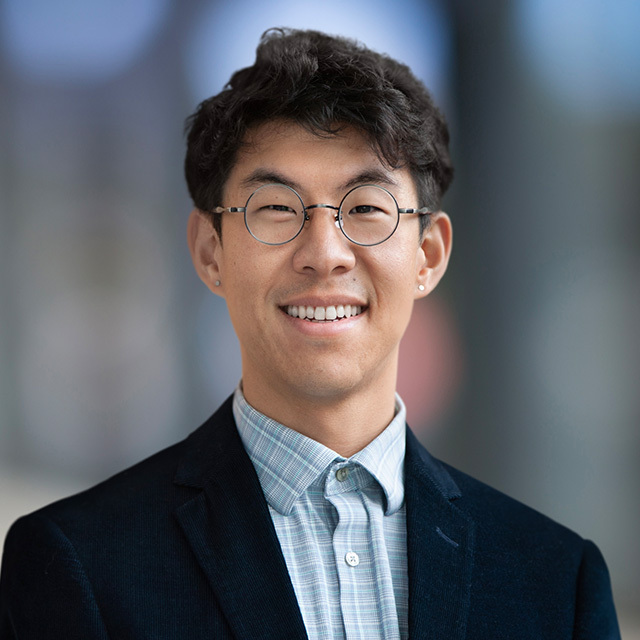
“My parents grew up in farming families in rural Taiwan and didn’t have a lot,” said cardiac electrophysiologist Albert Liu, MD, MS. “That, plus learning about racial and social justice, made me want to become an advocate for vulnerable and disenfranchised populations. I thought about becoming a teacher, but I also loved science and felt medicine would be a better path to engage with and empower communities.”
Dr. Liu was born and raised in Southern California. While earning his bachelor’s degree in chemistry from Pomona College, he became involved with Asian American/Pacific Islander advocacy groups, and tutored members of the Tongan community.
He earned his medical degree from UCLA, developing both a personal and academic interest in premature ventricular contractions (PVCs), which are extra heartbeats that originate in one of the lower chambers of the heart. While many people experience occasional PVCs, these may become problematic if they occur repeatedly over a long period of time. “I had atrial fibrillation and PVCs, so I was drawn to electrophysiology during medical school and worked with the EP group at UCLA to learn more about the mechanistic underpinnings of PVCs,” said Dr. Liu.
While giving patients beta blockers to lower their heart rate is first-line therapy for patients with frequent PVCs, this approach only works for some people. Dr. Liu and his colleagues found that beta blocker therapy tended to be more successful in patients who developed PVCs with faster heart rates and actually increased PVCs in patients whose irregular heartbeats correlated with slower heart rates. “There are very different phenotypes of PVCs,” he said. “Can we use that information to guide patients’ treatment with beta blockers?”
Similarly, they studied patients who were referred for cardiac ablation to treat their PVCs. “On the day of the procedure, some patients may not have any PVCs, but we need them to experience PVCs in order to do the ablation,” said Dr. Liu. To induce PVCs, they often administer isoproterenol, which has the opposite effect of a beta blocker and can rev up the heart, sometimes triggering PVCs. “That works in some patients but not others,” he said. “Again, we found that phenotype matters. If a patient tends to develop PVCs when they have a fast heart rate, isoproterenol is more likely to induce these during an ablation procedure.”
Dr. Liu hopes to learn more about how phenotypes influence disease course, and to develop tailored treatments. “There is a lot of room for precision medicine in EP,” he said. “Similar to PVCs, there are different phenotypes of atrial fibrillation – there isn’t just one cause. For example, heavy alcohol use, very active pulmonary veins, and HFpEF [heart failure with preserved ejection fraction] can all contribute to atrial fibrillation. We often treat all of those cases similarly, but they’re not all the same.”
Leading through the Pandemic
After earning his medical degree, Dr. Liu chose UCSF for internal medicine residency. “I saw UCSF as a progressive stronghold and was really excited about ZSFG [Zuckerberg San Francisco General] as a hospital that provided care to homeless and working poor patients,” said Dr. Liu. During residency, he was one of the only Mandarin-speaking providers in the Richard Fine People’s Clinic and found that his language skills opened the door to deeper relationships with many of his patients.
He spent an additional year as co-chief resident for inpatient care at ZSFG. Midway through that year, the COVID pandemic hit. “That was a very challenging time,” said Dr. Liu. “Much of what we did as chief residents was to project some degree of calm, as well as collating a central repository of evolving guidelines for the residents. There were many essential workers who receive care at the General, and it was important to share information about how we could best take care of them. At a time when there was a feeling of panic, I developed an ability to stay calm, come up with an action plan, and pivot if needed. Learning how to triage and be nimble was something that has also been valuable in both cardiology and electrophysiology.”
Dr. Liu and his co-chief residents worked hard to preserve the educational mission of the residency program during the pandemic. “At that time, all our conferences had been in person, so figuring out how to transition to remote learning was important,” he said. “We worked on how to do morning report on Zoom, and how to keep conferences interesting and engaging.”
Although UCSF had a very strong outpatient curriculum, during the pandemic many outpatient clinics were paused or greatly reduced, and residents were tapped to staff inpatient services. Dr. Liu and his colleagues reconfigured resident rotations in an unpredictable environment. “I realized I enjoyed being in an educational role – teaching, supervising, and being a manager of sorts,” he said. “I like being a person who can come up with creative ways to deal with problems.”
During residency and chief residency, he developed an interest in cardiology. “A lot of my experiences taking care of vulnerable patients at San Francisco General motivated my interest in going into cardiology to help those facing obstacles to accessing care,” said Dr. Liu. He worked with Professor of Medicine Steven Pantilat, MD, founding director of the UCSF Palliative Care Program and Kates-Burnard and Hellman Distinguished Professor in Palliative Care. They found that hospitalized patients with heart failure were referred later than cancer patients to palliative care, suggesting that there may be opportunities to refer heart failure patients earlier in their disease for help with symptom management and care planning.
Quality Improvement Research
Dr. Liu completed his cardiology fellowship at Northwestern University, where he also earned a master’s degree in health care quality and patient safety. As cardiology chief fellow, he worked closely with his program director, Benjamin Freed, MD, and took a leadership role in teaching residents and junior fellows.
“When I got there, I noticed that oftentimes complications were not discussed or debriefed,” said Dr. Liu. Based on his experience leading Morbidity and Mortality conferences during chief residency, he started a similar conference for the Northwestern Cardiac Care Unit. “For the first meeting, I chose a case in which one of my own patients had a bad outcome,” said Dr. Liu. “I tried to model humility and openness about what happened and what I could have done better but also pointed out system issues that contributed. It can be healing to talk through things that could have been done better.”
He also worked with a newly hired faculty member to create a new nuclear cardiology curriculum, developed an interdisciplinary vascular rotation in collaboration with cardiology fellows and the vascular surgery team, and enhanced the curriculum series for fellows.
All these experiences inspired his decision to pursue his master’s degree in health care quality and patient safety. As part of that work, he worked with Faraz Ahmad, MD, MS, on using the electronic medical record (EMR) to develop electronic quality measures of uptake of guideline-directed medical therapy to treat heart failure. He also worked with Matthew Feinstein, MD, MSc, on addressing gaps in cardiovascular care for people with HIV.
Dr. Liu also helped lead a quality improvement (QI) project testing the safety and feasibility of starting an intravenous form of an antiarrhythmic drug called sotalol in patients with atrial fibrillation. They tested a one-day “loading” process which included the first dose administered intravenously, followed by two doses in pill form, compared with the standard three-day hospitalization required for loading five oral doses. Because the possible side effects of sotalol include QT prolongation and sudden cardiac death (SCD), patients need to be monitored when they begin receiving the drug.
“Normally, it takes three days for a patient to get on sotalol, and patients aren’t doing anything except receiving the oral doses and being monitored,” said Dr. Liu. “If their QT remained within range, giving the first dose with IV sotalol followed by two additional oral doses to get them completely loaded would allow them to go home the following day, reducing the time they had to spend in the hospital and helping with bed volume. While this was a small feasibility study, our data showed that it is safe and generally well tolerated, and patients can go home the same day or the next day.”
Dr. Liu also contributed to a study of whether using a portable ECG with 6 rather than 12 leads could reduce the amount of time required to collect the ECG, without compromising the usefulness of the results. The KardiaMobile 6L ECG took an average of 7 minutes to administer, compared with an average of 10 minutes for the conventional 12-lead ECG. “In collaboration with Dr. Rod Passman, a Northwestern faculty member, we were interested in ways to improve clinic flow with new technologies,” said Dr. Liu. “Because clinic time and space is at a premium, saving several minutes per ECG can be very helpful in a busy clinic.”
As part of his master’s program, Dr. Liu also collaborated with Lucas Zier, MD, MS, an interventional cardiologist and data scientist at ZSFG. Together they built a decision support tool to help identify patients with heart failure with reduced ejection fraction (HFrEF) who might qualify for an implantable cardioverter-defibrillator (ICD) to reduce the risk of SCD. “When we started, only 5 percent of patients with indications were referred or had an ICD,” he said. “There was limited access to device therapy at the General, and many patients didn’t understand the benefits of receiving a device that wouldn’t improve their symptoms, but could save their lives.”
They created a tool in the EMR that flagged patients with heart failure whose ejection fraction was still low despite taking all the recommended medications. The tool prompted the physician to consider referring these patients to see an electrophysiologist to discuss the potential benefits and risks of receiving an ICD.
“As a provider, getting a lot of pop-up windows like that in the EMR can be annoying, so we talked with residents about what would help them look at this prompt rather than just clicking it away,” said Dr. Liu. “We also looped in two electrophysiologists at the General about ways to avoid creating a backlog of patients waiting for referrals due to tight resources. Quality work involves talking to a lot of stakeholders about what will actually lead to change.”
Preventing Sudden Cardiac Death
Dr. Liu returned to UCSF for his cardiac electrophysiology fellowship. “I realized during cardiology fellowship that I really like working with my hands,” he said. “You enter a flow state during procedures. EP is a great blend of that plus being quite cerebral. There’s a lot of puzzle-solving that goes into understanding arrhythmias – where is the circuit? Where is the electrical wavefront coming from? That really appealed to me. Also, thinking back to my experiences during residency at the General, there was not a lot of access to cardiac electrophysiology for my patients, and we had limited tools to treat cases of atrial fibrillation and atrial flutter. I thought that if I subspecialized in electrophysiology, maybe I could be a person who provides EP care to those who currently have difficulty accessing it.”
He developed many skills through his electrophysiology fellowship. “I’m a big picture guy, but with EP you also have to be very detail-oriented,” said Dr. Liu. “I learned to not make assumptions and to be very careful. Much of what we do is extremely precise, so being slow and deliberate with a diagnosis forced me to really pay attention. Also, as a clinician, I’m pretty conservative. I don’t like doing aggressive things if I can help it – I tend to prefer seeing how things unfold over time. But EP fellowship showed me how powerful and beneficial some procedures could be, such as VT [ventricular tachycardia] ablation.”
That perspective was reinforced through his research in the lab of cardiac electrophysiologist Zian Tseng, MD, MAS, Murray Davis Endowed Professor. Dr. Tseng leads the San Francisco POstmortem Systematic InvesTigation of Sudden Cardiac Death (POST SCD) Study. In this partnership, cardiac electrophysiologists and the County Medical Examiner perform autopsies and a comprehensive review of medical records for sudden deaths in San Francisco that occur outside the hospital. In the past, most of these were deemed to be SCDs, but this study has revealed that many people die from other causes, such as sudden neurological death, aortic dissection, or hemorrhage due to anticoagulant-related bleeding.
“I’ve learned to take nothing for granted, and to be very careful before drawing any conclusions,” said Dr. Liu. “It’s also shown me how taking a minimalist approach can have major negative impacts for high-risk patients. Patients could die suddenly because I decided that they didn’t need an ICD. I’ve had to recalibrate my view of medicine and how aggressive to be.”
Dr. Liu is working with Dr. Tseng’s lab on building out a cohort of people who have experienced an out-of-hospital cardiac arrest but were successfully resuscitated. “We are hoping to identify proteins that are circulating before, during, or after cardiac arrest that could serve as markers of elevated risk for VT or VF arrest in the next few weeks,” said Dr. Liu. They are comparing biomarkers in these cardiac arrest survivors with those found in SCD patients. “We’re curious if there are any commonalities in proteomics between these two groups that would allow us to predict outcomes,” he said.
Because many sudden deaths are due to other causes, he is also interested in determining whether there are better ways of preventing these other types of death. “For example, hypertension is a major contributor to heart attack, heart failure, but also things often attributed to SCD, such as aortic dissection,” said Dr. Liu. “Rather than just focusing on ICDs, should we work backwards and think about ways to better treat hypertension, knowing that there are all these other categories of sudden death that are not cardiac that are nevertheless influenced by hypertension?”
Dr. Liu finds this investigation very rewarding. “One of the reasons I like being in Zian’s lab is because a lot of it is about finding the truth,” he said. “A lot of existing SCD data makes flawed assumptions. In the POST SCD study, we have meetings every Tuesday where we look over all the data for each case and decide as a group how someone died.”
“Albert has been a huge asset to the lab,” said Dr. Tseng. “His perspectives in QI and improving patient care on a population level help bolster one of the original intents of POST SCD – to learn from these tragedies to prevent the next generation of sudden cardiac deaths in our San Francisco community and beyond.”
Grace under Pressure
After completing his electrophysiology fellowship, Dr. Liu joined the UCSF Cardiology faculty in 2025. He cares for patients at the Parnassus campus as well as at Stanyan Hospital (formerly Saint Mary’s Medical Center), where he is working to build clinical volume and capacity.
One of his specialties within electrophysiology is lead extraction, which occurs when the wires from an ICD malfunction and need to be removed and replaced. Because the body views the wire as a foreign body, it grows fibrous tissue around the lead, which make extraction a very complex, delicate procedure requiring special tools such as lasers and snares, as well as engineering approaches to successfully remove these wires.
During these sometimes stressful procedures, he draws on his chief residency experiences leading trainees during the height of the COVID pandemic. “I’ve developed skills for staying calm under pressure, and helping others remain calm as well,” said Dr. Liu. “I’ve always done well in high acuity crisis moments, which attracted me to cardiology in the first place. Those situations focus me and change my energy.”
In between completing his electrophysiology fellowship and joining the UCSF faculty, Dr. Liu took two months off to complete an intensive language immersion course in Taiwan. He spent three hours in general language classes each morning, then spent the afternoons one-on-one with a tutor, building his medical Chinese vocabulary and engaging in clinical role play scenarios.
“I already spoke Mandarin fairly well, but I wanted to become certified as a bilingual clinician,” said Dr. Liu. “It’s very meaningful to me. The rapport you have with patients is different when you speak their language. A lot of immigrants from East Asia have less trust of Western medicine. Being able to speak Chinese with patients and explain why they might need a defibrillator or an ablation helps with cultural understanding.”
“Dr. Liu is a valuable addition to our team, bringing strong problem-solving skills to every case, and a calm and highly organized approach to simple and complex procedures alike,” said cardiac electrophysiologist Joshua Moss, MD. “He is particularly adept at balancing careful attention to detail while maintaining a clear understanding of the bigger picture. His contributions to expanding EP care at UCSF Stanyan and his certification as a bilingual clinician for Mandarin-speaking patients have already had a substantial impact.”
Dr. Liu is glad to have joined the UCSF faculty. “I really enjoy teaching at all levels, from med students to residents, general cardiology fellows, and EP fellows,” he said. “UCSF is a place where people are chill, yet are also very competent, care deeply, and work very hard. I like being in that environment. Taking care of patients, especially those who are most vulnerable, is very special and nourishing for the soul.”
Outside of medicine, Dr. Liu enjoys rock climbing, playing tennis, and cooking Chinese and Korean food for his friends.
- Elizabeth Chur