
Faculty Spotlight: Pablo Sanchez, MD
Finding the Throughline
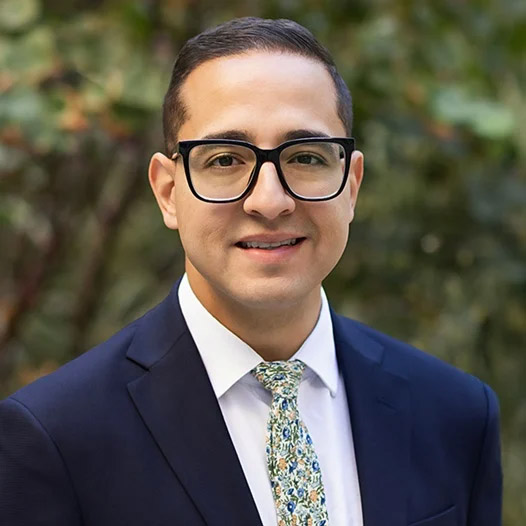
Photo credit: Andrea Rowe, UCSF
Ever since Pablo Sanchez, MD, and his college sweetheart met, dance has been an integral part of their lives. “From the moment we first spoke, we talked about going dancing together,” he said. “We were part of salsa and mambo dance teams in college and medical school, and everywhere we’ve moved, we’ve had a salsa family.”
In addition to bringing him joy and community, dance has taught Dr. Sanchez many life lessons. “Storytelling is very important for dancing,” he said. “Every song tells a story which has a beginning, middle, and end.” No matter how complex a dance becomes, what holds it together is a throughline – a narrative arc that connects all the parts.
Now in his work as a critical care cardiologist, Dr. Sanchez uses those same skills to successfully navigate the care of acutely ill patients who struggle not only with heart disease, but often several other life-threatening conditions. “As the ICU physician, you’re the center of the team, so you need to be a very good communicator,” he said. “That requires coupling medical knowledge with the ability to explain what’s going on to the patient, their family, and other specialists. Not losing the forest for the trees, staying grounded in what makes the most sense for that patient, and drawing clear throughlines helps guide the best course of action.”
A Transformative Teacher
Dr. Sanchez was born in Barquisimeto, a city in northwestern Venezuela. His parents were entrepreneurs and first-generation college graduates; his mother owned a restaurant and bakery, and his father was a manager for the local branch of a Brazilian transnational brewery. His family took some vacations to Florida in the 1990s, but after Hugo Chavez was elected president of Venezuela in 1998, his parents decided to move to the U.S. with Dr. Sanchez and his younger sister. “We sold everything and moved to Chandler, Arizona,” he said. “It was massive culture shock. None of us really spoke English. I was 14 years old, right at the beginning of high school.”
The first few months were difficult. “I remember sitting in Earth Sciences and not being able to understand anything,” said Dr. Sanchez. He enrolled in English as a Second Language classes, and by sophomore year, was able to join regular classes conducted in English.
He was initially interested in computer programming, but Kimberly Hatch, his biology teacher, changed his life course. “She was very friendly, bright, and could explain difficult concepts in a way that was very understandable,” said Dr. Sanchez. “She also knew Spanish, so we conversed and joked around in both Spanish and English, which made it easier for me.”
He still remembers her stellar teaching style. “While explaining the intricate minutiae of how cells communicate, she told a story, then connected that back to how it applied to the larger system,” said Dr. Sanchez. “She went back and forth, not losing sight of the forest for the trees, constantly opening the aperture to connect the small details with the big picture.”
Opening Doors to New Opportunities
Ms. Hatch was the first of many influential teachers who helped guide Dr. Sanchez’s development, helping inspire him to pursue a career in medicine. He went on to earn a bachelor’s degree in physiology from the University of Arizona in Tucson, where he also completed his medical degree.
One of his key mentors during medical school was Steven Goldman, MD, chief of cardiology at the Southern Arizona VA Health System in Tucson for more than 35 years. “He is very direct, and could be gruff and intimidating, but he’s very devoted to education,” said Dr. Sanchez. “Every week we had something called Goldman Rounds, where we’d go through a patient’s EKG, echo, and other diagnostics. Dr. Goldman painted a clear picture from the beginning to the end, and all his trainees came away with well formulated teaching points.”
Dr. Sanchez began conducting basic and translational research in Dr. Goldman’s lab, focusing on cell-based therapeutics for ischemic cardiomyopathy. They used animal models to wrap a cellular scaffold around the heart to test whether it improved heart function. “Throughout this very basic, translational science, he always hearkened back to the larger physiological conditions that we were trying to improve for patients,” he said. “The throughline to the end result was very obvious when I was working with him. And because he was very direct, my ability to understand and explain scientific concepts became very good, very fast.”
While Dr. Goldman expected a lot from his trainees, he was also one of their biggest champions. “Dr. Goldman encouraged me to apply to the Brigham [and Women’s Hospital at Harvard] for internal medicine residency, a place I didn’t think I had a chance of getting into,” said Dr. Sanchez. “He said, ‘No, you absolutely should apply! Look at all the work you’ve done with me! I’ll really go to bat for you and chat with people there.’ He opened the door for me.” Dr. Sanchez was accepted, completing his internal medicine residency and chief residency there.
His main mentor was David Morrow, MD, MPH, director of the Cardiac Intensive Care Unit (CICU) and one of the foremost leaders in cardiac critical care. “He’s a very approachable, soft-spoken individual who is extremely bright and able to distill concepts in cardiac physiology,” said Dr. Sanchez. “He explained cardiac output and a very difficult concept called the Fick equation, using dump trucks to explain oxygen delivery to tissues. Instead of going into complex equations, or data and trial evidence, he explained it in a way that could be applied to a patient just a few minutes later.”
Dr. Morrow became his mentor, and inspired his passion for combining cardiology with critical care. With Dr. Morrow’s guidance, Dr. Sanchez studied a poorly understood phenomenon – respiratory failure in the cardiac ICU. “Most patients are in the cardiac ICU because they have heart failure, cardiogenic shock, or another problem with their heart,” said Dr. Sanchez. “But we’ve become a lot more aware that many of those patients also have renal failure, respiratory failure, the need to be intubated, or other serious conditions. That’s why it’s beneficial to have someone with training in critical care in addition to cardiology. In addition to caring for the heart, you need to be very good at dealing with other critically ill organ systems.”
Developing a Breadth of Skills
After finishing his residency and chief residency, Dr. Sanchez moved to Stanford University, where he completed a general cardiology fellowship and served as chief cardiology fellow, then completed an additional fellowship in critical care medicine. “During my cardiology fellowship, I developed all the basics, such as echocardiography and cardiac catheterization skills,” he said. “But even though I spent a fair amount of time in the cardiac ICU, following that up with a critical care fellowship was a gamechanger. I got to apply all my cardiology skills to other kinds of ICUs, while developing new skills.”
For example, as a critical care fellow, Dr. Sanchez cared for patients in the general surgery ICU who were recovering from trauma or surgery. In the medical ICU, he managed the care of acutely ill patients with cancer, gastrointestinal disorders, and other non-cardiac illnesses. In the neurological ICU, he learned how to care for patients with acute strokes or head bleeds. He also spent time in the operating room, learning how to do anesthesia, sedation, and intubation, and spent elective time performing transesophageal echocardiograms and caring for patients before and after cardiac surgery.
“I didn’t learn these skills during my general cardiology fellowship, and would only have been able to develop them after many years of attending in the cardiac ICU,” said Dr. Sanchez. “I accelerated that by doing a dedicated year of critical care medicine, squeezing every second of my time in various ICUs to learn a variety of skills. Each of these different ICU settings is guided by discipline-specific foundational knowledge, which taught me principles I could apply later to my work in the CICU. It allowed me to hit the ground running when I became a faculty member.”
Because today’s acutely ill cardiac patients often have multiple serious conditions affecting other organ systems, gaining that breadth of experience allows critical care cardiologists like Dr. Sanchez to effectively manage their hospitalized patients. It’s a bit like an aspiring chef who trains at many restaurants, from Japanese to Peruvian to Turkish, before bringing all those skills to a plum job at a California fusion bistro.
“All the different ICUs are treating patients and saving lives, so whatever skills we can pick up from other ICUs and bring to our own is helpful,” said Dr. Sanchez. “For example, we need to make sure patients receive adequate nutrition, anticoagulate them to prevent venous thrombosis, and keep close tabs on what all their other organs are doing. If you’re too late to the game to salvage their kidneys, liver, or lungs, they may no longer be a candidate for a heart transplant or ventricular assist device, and ultimately the heart would not be the thing that precludes your patient from leaving the hospital – it would be all these other issues.”
‘You Can Do Both’
In addition to developing a broad range of skills during his two fellowships, Dr. Sanchez also pursued ambitious research. “I came to Stanford with a niche idea: how to marry respiratory failure with issues that are problematic for the heart,” he said. He worked closely with Angela Rogers, MD, a Stanford pulmonologist and critical care medicine expert who conducts translational research on acute respiratory distress syndrome (ARDS).
“ARDS is a very common syndrome in medical ICUs, but you can find it in any ICU,” said Dr. Sanchez. “It’s basically fulminant respiratory failure: patients are very sick, on a ventilator, and many of them die. We don’t have many good therapies. Many of these patients have right ventricular dysfunction, and may also have shock, be on vasopressors, and have cardiac injury. I became interested in the marriage of respiratory failure and cardiac issues during residency, and that interest was easily transported to ARDS and cardiac dysfunction during fellowship. I want to know, how is the heart injured by ARDS? Can we use serum protein analysis to predict whether patients with ARDS will also have right ventricular dysfunction? How do those two things together translate into outcomes?”
While these questions intrigued Dr. Sanchez, he wasn’t sure pursuing a career as a physician-scientist was his calling. “As a cardiology fellow, you’re very busy and tired,” he said. “I’m also very interested in medical education and in connecting with patients. I wondered if I wanted to primarily become a clinician-educator rather than a researcher who also focused on teaching and clinical care.”
Once again, a mentor helped guide him. “Angela Rogers reinvigorated my love for investigation,” said Dr. Sanchez. “At the bedside you constantly have questions such as, ‘Why did this patient develop shock while that one didn’t, even though they both have ARDS?’ Through research you can start to find answers. When applying for grants got difficult and it was hard to conduct research while also providing clinical care, Angela Rogers told me, ‘Look, you can do both – I see the potential in you.’
Dr. Sanchez decided to pursue the challenging but rewarding path of becoming a physician-scientist. “Things started going a lot better – grants got funded, papers got published,” he said. “Through Angela’s mentorship and unflinching support, I learned how to do a lot of coding on my own. My skills grew massively, because she nurtured me and allowed me the space to fall back in love with research.”
Inflammatory Phenotyping of ARDS
One of his main research projects in Dr. Rogers’s lab focused on discovering more about the root causes of ARDS. “ARDS is a very heterogeneous syndrome,” said Dr. Sanchez. “Its definition is relatively simple: an acute onset of respiratory failure involving both lungs that can’t be explained by the heart, and which requires that the patient be on some amount of respiratory support.”
With such a broad definition, many different conditions could potentially lead to ARDS – like dozens of tributaries emptying into a vast river. Rather than searching for a one-size-fits-all cure, it’s possible that each “tributary” may have its own set of driving factors that lead to ARDS, as well as specific therapeutic targets.
Under the guidance of Dr. Rogers, Dr. Sanchez applied a precision medicine approach to ARDS by conducting inflammatory phenotyping of the disease. “There are many different ‘buckets’ that you could separate patients with ARDS into,” he said. “You could group them by disease, such as pneumonia, sepsis, or trauma. Or you could use a machine learning algorithm to analyze inflammatory biomarkers from their serum, among other characteristics, to conduct a clustering analysis to identify clearly distinct groups of patients.”
Carolyn Calfee, MD, MAS, professor of medicine and anesthesia at UCSF and an ICU attending, is a trailblazer in this area. She first described and applied this approach in randomized controlled trials in ARDS many years ago. By studying biomarkers, she and her colleagues classified these patients as either hyperinflamed – having increased levels of inflammatory cytokines – or hypoinflamed, characterized by lower cytokine levels. This shifted the paradigm towards biology-based phenotyping of ARDS.
Most importantly, in retrospective analyses of clinical trials, these phenotypes seem to respond differently to therapies they were randomized to, even though the original trial results were neutral. In other words, it appears that certain therapies may show promise for a subset of patients, if those patients can be correctly identified ahead of time based on their phenotype.
Dr. Sanchez now works with Dr. Calfee, Dr. Rogers, and others to study how these molecular phenotypes of interact with cardiac dysfunction, injury, and shock, particularly in patients with ARDS and sepsis.
Dr. Sanchez and his colleagues focused on one biomarker called peak troponin-I. Interestingly, they found that the highest troponin level they recorded between presentation to the hospital and admission was only associated with increased mortality in hypoinflamed patients, not in hyperinflamed patients. “The hypoinflammatory group had less contributors to mortality than the hyperinflammatory group – less shock, multiorgan failure, and need for mechanical ventilation,” he said. “Having a higher troponin on admission really told you something about their eventual risk of mortality. That may be based on how much their background comorbidities could drive outcomes. Those might include heart failure, coronary artery disease, or other conditions they came in with before they got sick with sepsis or ARDS.”
Another question for future investigation in the hyperinflammatory group is whether the rate of rise of troponin from presentation to admission might be associated with increased mortality, since their analysis suggested there might be a connection. “It’s nuanced – just one number doesn’t give you the answer,” said Dr. Sanchez. “But in the future, if we’re able to measure how much and how fast the troponin increased, it might provide more insight about how comorbidities interact with the acute insult.”
One study limitation was that this was a retrospective study, in which troponin and other biomarkers were collected as part of clinical care rather than as part of a formal research study. Dr. Sanchez is now applying for grant funding to prospectively collect various biomarkers, including serial serum samples, to see how their levels might change over time. He also wants to perform prospective echocardiograms on patients with ARDS to determine if the right and left ventricles are normal or dysfunctional, to help identify possible culprits.
By developing a clearer understanding of the underlying mechanisms, Dr. Sanchez and his colleagues could better tailor therapies for each ARDS phenotype. “I love cardiac physiology, but if it turns out that the most important thing for some patients is focusing on another aspect such as their renal dysfunction, I’ll pursue that avenue,” he said. “But we won’t know that unless we discover more about the causes.”
Dr. Sanchez is also interested in applying a similar approach to cardiogenic shock, a life-threatening condition in which the heart suddenly becomes unable to pump enough blood to the rest of the body. “There may be molecular pathways or biological mechanisms that help us better understand which patients develop shock, and why,” he said. “I’m trying to acquire as many skills as possible, from proteomic analysis to transcriptomic analysis, troponin trends, and hemodynamic evaluations, to help us devise therapies that target specific types of patients so we can improve care.”
A Rising Star
After finishing his fellowships in 2024, Dr. Sanchez was recruited to the UCSF Division of Cardiology. “I wanted to be as broad-based in my clinical practice as possible, and this position allowed me to continue doing all these different procedures I learned to do very well in my critical care fellowship,” he said. “I also valued how closely knit the section of Critical Care Cardiology is at UCSF. My colleagues are very friendly and work well with the rest of the hospital, and it’s very easy to talk with them about difficult situations.”
Even with all his years of training, that cohesive support was vital in helping him successfully transition to a faculty position. “Once you become an attending, you act with a lot more independence than during training,” said Dr. Sanchez. “At UCSF, I can text or call my colleagues in the Cardiac ICU anytime, day or night, and they will answer and let me bounce ideas off them.”
“Pablo is an exceptional clinician and a talented researcher,” said Connor O’Brien, MD, associate director of the section of Critical Care Cardiology. “In the CICU, Pablo brings a collaborative spirit and positive energy that makes teams thrive. He is willing to take on any case and approaches his work in a methodical and patient-centered fashion. He often identifies unique treatment pathways, while keeping patients’ goals front of mind. His deep understanding of critical illness is reflected by his passion for latent class phenotyping. Pablo brings his clinical experience to the lab, where he is trying to identify novel ways to better describe patient physiology, in hopes of identifying early and targeted interventions.”
Dr. Sanchez was also drawn to UCSF because of its thriving research environment. His research mentors are Dr. Calfee and Michael Matthay, MD, professor of medicine and anesthesia at UCSF and associate director of Critical Care Medicine. “They have legions of trainees who think the world of them,” said Dr. Sanchez. “They’re exceptional mentors who are humble and give you a lot of their time, effort, and focus.”
“Dr. Pablo Sanchez is a talented young investigator who published an important study in Critical Care this year that establishes a novel association between myocardial injury and mortality in patients with sepsis or acute respiratory distress syndrome,” said Dr. Matthay. “He brings outstanding clinical expertise in critical care for cardiology patients, in conjunction with his plans to be an NIH-supported physician-investigator.”
“Pablo is an extraordinarily talented, hardworking, generous, and brilliant physician-scientist who we were lucky to recruit to UCSF after his training in both cardiology and critical care from Stanford,” said Dr. Calfee. “His unique skillset and creative research vision will be a huge asset, both on the clinical service and in the research lab. We can’t wait to see all he will accomplish here at UCSF.”
The Importance of Strategic Mentorship
In addition to his love for clinical care and research, Dr. Sanchez is also a passionate educator. In his previous roles as chief resident and chief fellow, one of his main responsibilities was teaching other trainees. “I like taking a concept from the basics to very advanced through the course of a lecture, and having every learner get something out of it,” he said. “I also try to create a very inviting atmosphere. I tell trainees, ‘This is a hard concept, and it took me a while to get it. I’m very chill. I want you to tell me what you’re thinking.’ Once you lower the stakes and allow people to be very vocal, people will share their opinions. That engenders lively discussions.”
Dr. Sanchez channels some of the inspiring approaches he experienced from his own mentors and teachers, all the way back to Ms. Hatch in high school. “I like to tell a story with everything I do, to make a palpable connection,” he said. “It’s hard to get anything from just listening to a lecture, so I try to make it as interactive and dynamic as possible as we work through a problem. When I’m giving a presentation, I’ll write it down and then edit out the superfluous things. I try to make the throughline very clear, so everybody can understand it.”
That gift for communication also animates his conversations with patients and their families. “I always talk with them about what’s most important to them,” said Dr. Sanchez. “What are the three most important things they hold dear? Sometimes the patient will get better and get to go home. Other times, it’s about helping them pass away in a way that is dignified and comfortable. Finding out what’s most important to them helps me as I discuss options with them, so I can draw very clear lines about what will get us to their goals of care. That helps us pare down many possibilities to what make sense for them.”
Dr. Sanchez has never forgotten all the people who have helped him along his journey. “How did someone like me, who came from Venezuela knowing very little English, end up at one of the preeminent academic institutions in the world?” he asked. “Some small portion was grit and sticking to it, but a big portion was having strategic mentorship throughout. I’ve had the good fortune of latching on to people who nourished me and gave me opportunities. If I could, I would create a system that would help other people like me. I’d create a pipeline that would simplify and standardize my positive professional experience for others who would never have those opportunities otherwise. I wouldn’t be here without my mentors, who elevated my sense of what I could do with my life.”
Outside of medicine, Dr. Sanchez enjoys playing electric and acoustic guitar, as well as the cuatro, a four-stringed Venezuelan guitar. He also loves playing ball and flying kites on the beach with his two young sons, Pablo and Gabriel. Even with his busy schedule, he still makes time to go salsa dancing with his wife, Jessica Sanchez, MD, a pediatric cardiologist at Stanford.
- Elizabeth Chur