
Faculty Spotlight: Michela Faggioni, MD
Breadth of Vision with Laser Focus
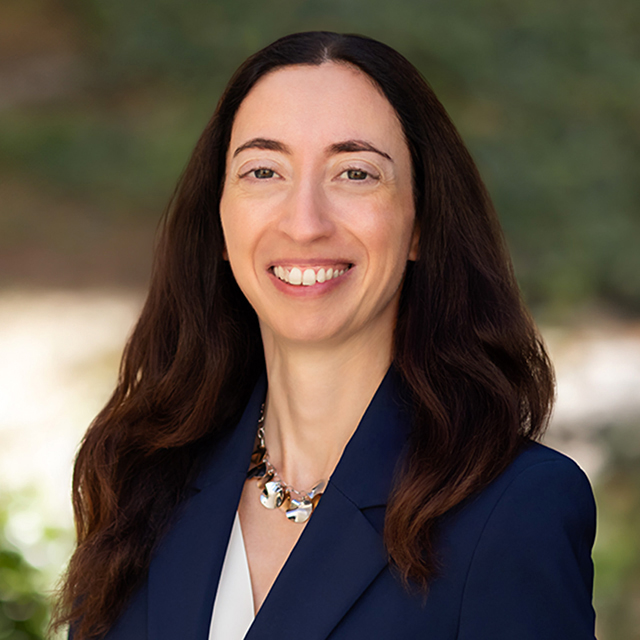
Photo credit: Andrea Rowe, UCSF
Interventional cardiologist Michela Faggioni, MD, was inspired to become a doctor because it offered a world of possibilities. “A career in medicine allows you to conduct research, do clinical work and surgery, and travel to work for organizations like Doctors without Borders,” she said. “It keeps a lot of different options open.”
Dr. Faggioni was born and raised in Lerici, a coastal town in northwestern Italy. After completing her medical degree and a postgraduate clerkship in general surgery, internal medicine and primary care at the University of Pisa, she had an opportunity to live abroad and gain research experience. Dr. Faggioni was recruited to Vanderbilt University in Nashville, Tenn., where she joined the lab of Björn Knollmann, MD, PhD, an expert in the biology of cardiac arrhythmias.
She gained skills in basic research, studying animal models of a congenital arrhythmia called catecholaminergic polymorphic ventricular tachycardia (CPVT). It’s an inherited genetic disorder that can produce potentially life-threatening cardiac arrhythmias, especially during exercise or heightened stress. “The heart squeezes based on the movement of ions, including calcium,” said Dr. Faggioni. “If there is a dysfunction in calcium trafficking, the heart can potentially be prone to abnormal heart rhythms.”
They studied a mouse model of this disrupted calcium movement, learning more about how specific mutations could contribute to cardiac arrhythmias in CPVT. They also tested different drugs that could help suppress mishandling of calcium in the heart, and found that using a pacemaker to speed up heart rate during exercise could help prevent ventricular arrhythmias in both an animal model and patients with CPVT.
In addition to gaining bench research experience, Dr. Faggioni learned many other skills from her principal investigator, Dr. Knollman. “He was my first mentor, and showed me how to do everything,” she said. “He taught me how to do the experiment, write a paper, make a poster, and give a presentation – all the way down to how to make the font look nice and how to stand at a podium. At conferences, he was always introducing me to everybody. He also taught me how to advertise my research. Although you’re only required to be in front of your poster for a couple of hours, he fostered a kind of discipline, advising me to stand in front of my poster from 8 a.m. to 5 p.m., talk with people about what our lab was doing, and ask if they had any ideas.”
Research and Clinical Care
After two years, Dr. Faggioni returned to Italy and completed her cardiology fellowship at the University of Pisa. Based on her research at Vanderbilt, she initially thought she would become an electrophysiologist. But spending time in the cardiac catheterization lab performing percutaneous coronary interventions (PCIs), in which a cardiologist places a stent to open a blocked coronary artery, changed her mind. “Cath lab procedures are very quick, with immediate reward, especially if it’s diagnostic or a simple PCI,” she said. “You open the vessel or replace their [heart] valve, the patient feels better – done. I liked that faster pace.”
During her fourth year of fellowship, one of her professors offered to connect her with two colleagues at Mount Sinai Hospital in New York. “She said, ‘I know you like to travel abroad – would you like to go to New York and do research?’” recalled Dr. Faggioni. “I said, ‘Yes, of course – send me!”
She spent her fourth year of cardiology fellowship conducting clinical research with interventional cardiologists Roxana Merhran, MD, and George Dangas, MD, PhD. “They had huge databases of prior clinical trials that you could query and do subanalyses on different topics within interventional cardiology,” said Dr. Faggioni. She published a number of papers focused on pharmacologic treatment of patients with acute coronary syndrome and those who received stents. She also found that African American patients with acute coronary syndrome were underprescribed a potent anti-platelet therapy, despite being at highest risk for cardiac events.
That research experience helped Dr. Faggioni land an internal medicine residency at Mount Sinai, which she began after completing her cardiology fellowship at the University of Pisa. After finishing her residency, she applied for a U.S.-based cardiology fellowship at the University of Pennsylvania, where she completed two years of general cardiology fellowship and two years of interventional cardiology, focusing on both structural and coronary interventions.
At Penn, Dr. Faggioni conducted clinical research on structural heart disease, including a meta-analysis indicating underrepresentation of women and racial and ethnic minorities in valvular heart disease clinical trials. She also published early results about Evolut Pro, a new device used for transcatheter aortic valve replacement (TAVR).
One of her key clinical mentors was Paul Fiorilli, MD, an interventional cardiologist and the director of the interventional cardiology fellowship program. “All his patients loved him, and he was able to explain procedures to them in very simple ways,” said Dr. Faggioni. “He was a very gentle person who always gave us a lot of positive reinforcement. If you were struggling with a procedure, he’d rarely take over. Instead, he’d say, ‘Let’s try something different – a different catheter, a different angle.’ If there was a difficult situation, he would tell us, ‘It’s not you, it’s the situation – if you can’t do it, I can’t do it, either.’ Sometimes a patient is really sick or their anatomy is really challenging, but you do the best you can.”
Dr. Fiorilli also made a point to highlight trainees’ accomplishments. “Whenever you did something right, even if it was simple, he would make comments to other people like, ‘Guys, did you see how quick Michela was? We should start prepping the next patient because we’re almost done with this procedure,’” said Dr. Faggioni. “That positive reinforcement actually made you work better, because you were relaxed and focused. Every time we were with him, we felt like we could do anything. My co-fellows and I joked that a day with Paul was like going to therapy, because we felt so good about ourselves afterwards.”
“Dr. Faggioni is an outstanding interventional cardiologist,” said Dr. Fiorilli. “She is compassionate, thoughtful, and has the highest level of skill in the cath lab. She was a standout fellow during her training at the University of Pennsylvania, and was one of the most exemplary trainees I have worked with in my past 15 years in medicine.”
The ‘Perfect Job’
After completing her fellowship training, Dr. Faggioni decided to join the UCSF Cardiology faculty in 2024. She appreciated the warm welcome she received from Sammy Elmariah, MD, MPH, chief of Interventional Cardiology in the Division of Cardiology, medical director of the Adult Cardiac Catheterization Laboratory, and Leone-Perkins Family Endowed Professor of Medicine. “Sammy told me I could do any procedure I wanted to do, which was very appealing, and different from other places I interviewed,” she said. “It’s rare for an interventional cardiologist working at an academic institution to be able to do everything. I was so lucky – there was a perfect job available at the right time, and I got it. It was serendipity.”
She enjoys performing a wide range of interventional cardiology procedures. In addition to imaging coronary arteries through angiography and opening blocked vessels with stents, Dr. Faggioni does many structural interventional procedures. These include aortic valve replacement, mitral valve replacement and repair, and tricuspid valve replacement and repair, all performed via catheter rather than requiring surgery.
Dr. Faggioni also uses interventional approaches to close holes in the heart. Before birth, a fetus naturally has a flaplike opening between the atria – the two upper chambers of the heart. Because the mother’s lungs supply oxygen for both herself and her baby, the fetal heart doesn’t have to send blood to its own lungs. Shortly after birth, when the baby begins to breathe independently, this opening in the heart naturally closes up. But in about 25 percent of people, the hole remains, forming what’s called a patent foramen ovale (PFO).
Usually a PFO does not cause complications, but occasionally it can. “Most young, healthy people won’t develop clots in their veins, but if they do and the clot travels to the heart, it may cross the PFO,” said Dr. Faggioni. “If that happens and the clot ends up in any organ other than the brain, there is a good chance they would never know. But if the clot ends up in the brain, despite being small it may cause a clinically significant stroke. It’s relatively rare, because that requires a whole series of unlucky events.”
Dr. Faggioni collaborates with neurologists on UCSF’s stroke team to care for these patients. Often they are relatively young, have PFOs, and even though they lack other risk factors, have already had a stroke or a “mini-stroke,” also known as a transient ischemic attack (TIA). Using catheter-based technology, Dr. Faggioni plugs the hole created by the PFO, using a device that looks a bit like a tiny barbell, with two thin disks that sit on either side of the PFO and are connected by a slender tube. This prevents abnormal blood flow from the right atrium to the left atrium and helps lower stroke risk.
Dr. Faggioni performs another procedure, called left atrial appendage occlusion, which can help also prevent stroke. The left atrial appendage is a small pouch that sticks out from the left atrium. In patients with atrial fibrillation, blood moves sluggishly through the heart and may end up pooling in this pouch. If blood clots form, they can travel to the brain and cause a stroke. Blood thinners can reduce that risk, but some patients – especially those who are older – develop excessive bleeding and are unable to tolerate these medications. To help these patients, Dr. Faggioni can use a catheter to place a plug at the mouth of the left atrial appendage. “This can prevent clots from forming, or if they do, they stay in the left atrial appendage,” she said.
Renal Denervation to Treat Hypertension
She is also expert in another procedure to help patients who have uncontrolled high blood pressure. “Typically we advise patients with hypertension to reduce salt intake, exercise more, and lose weight,” said Dr. Faggioni. “If that doesn’t work, we’ll start them on medications. We begin with one medication, but can add a second, third, or even fourth medication until their blood pressure is controlled, because that reduces risk of stroke, heart attack and death in the long run. But for some people, even that is not enough to control their blood pressure, or they have side effects or other barriers that prevent them from taking these medications.”
One option for these patients is a procedure called renal denervation. The kidney is an amazing organ: not only does it filter waste products and excess fluid from the bloodstream and rebalance minerals and electrolytes, but it also helps regulate blood pressure via the nerves around the kidney, which communicate with the brain. Back in the 1940s, surgeons treated some patients with dangerously uncontrolled high blood pressure by intentionally cutting the nerves around the kidney, which helped lower their blood pressure. However, that procedure was discontinued in part because it was so invasive.
Now there’s a much easier solution. Similar to the way cardiac electrophysiologists use radiofrequency to carefully burn small areas of the heart in patients with cardiac arrhythmias to interrupt abnormal heart rhythms, interventional cardiologists can use a catheter to access the kidney vessel. They then use ultrasound or radiofrequency technology to increase the temperature in the vessel to intentionally damage these nerve endings embedded in the fat around the renal artery.
“The blood flowing through the artery cools the inside of the blood vessel and prevents it from becoming injured, but as the radiofrequency expands in the wall of the vessel and then in the fat tissue on the outer layer of the blood vessel, there’s nothing there to cool it off, which leads to the nerves becoming damaged,” said Dr. Faggioni. She ablates the main vessel and the branches leading into each kidney, which prevents it from signaling the brain to increase blood pressure.
“The procedure produces a blood pressure drop of about 10 points on average, which is typically the effect we get from one [hypertension] medication at a high dose,” said Dr. Faggioni. “If someone has a baseline blood pressure of 160/90 and receives renal denervation, it’s not likely they’ll be completely cured, but it will be 10 or 15 points lower, which helps reduce risk of stroke and cardiovascular disease.” The procedure itself is low-risk, requiring only the insertion of a small IV into the femoral artery, and patients go home the same day. It does not cause excessive drops in blood pressure or other side effects. “It’s typically very safe,” she said.
Renal denervation was approved in Europe in 2013, but was only approved by the U.S. Food and Drug Administration in 2023. Dr. Faggioni is the first faculty member in the UCSF Division of Cardiology to offer this procedure to patients.
“Since joining UCSF, Dr. Faggioni has broadened the scope and depth of the Interventional Cardiology program,” said Dr. Elmariah. “She performs a wide range of procedures, including transcatheter valve interventions, left atrial appendage occlusion, renal denervation, and complex coronary interventions. She approaches each case with meticulous attention, exceptional technical skill, thoughtful judgment, and genuine empathy. Her contributions have strengthened both our clinical practice and our culture of collaboration.”
Helping Patients, Training Fellows
Dr. Faggioni enjoys the many different procedures she performs. “It’s very satisfying to see patients on the floor after I’ve treated them, and they tell me, ‘Now I can walk around the hall – I already feel so much better,’” she said. “Then you see them a month later in clinic and they’re doing even better. It’s very rewarding knowing that patients trust you.”
She appreciates the opportunity to train future interventional cardiologists. “When fellows really get it and improve, that’s the best feeling,” said Dr. Faggioni. “This year I spent a lot of time with one of our interventional fellows during the first few weeks of his fellowship. I got to teach him the basics – how to engage the catheter, how to put in the wire [through the catheter], what to be careful about. When I saw him working a few weeks later, he said, ‘I do exactly what you taught me, and it works.’ That was very rewarding.”
Throughout her own training, Dr. Faggioni learned from many different attendings. “It’s good for trainees to see how different interventional cardiologists work, because you always want new tools and skill sets in your toolbox,” she said. “In training it’s helpful to see a lot of different styles, but ultimately you have to find your own style, and what works for you.”
Dr. Faggioni values the collaborative environment at UCSF. “I have amazing colleagues,” she said. “Although I’m the attending in the room, I’m not alone – I have my nurses and fellows. If something goes wrong, we all drop what we’re doing and run to help each other. If someone else needs me, I can be in the Cath Lab in two minutes. That’s reassuring – there’s a team of people working to get the procedure done.”
Outside of the Cath Lab and clinic, Dr. Faggioni has been an avid fan of Formula One racecar driving since age 13. She also enjoys downhill skiing, reading, swimming in the Mediterranean, and watching the Italian women’s volleyball championship.
- Elizabeth Chur